
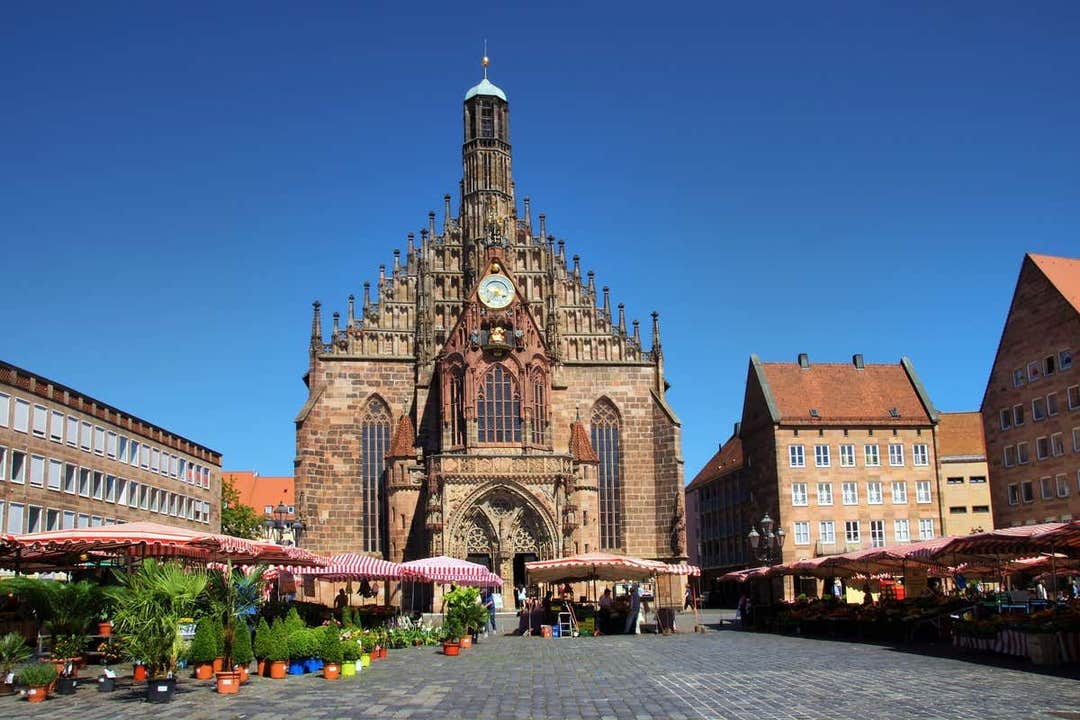


Turn your trip into an adventure with the top 19 best things to do in Nuremberg. The city is full of history, art, and unique experiences. Visit museums, enjoy a cold beer on a hike, or explore the Old Town. This destination invites you to uncover its secrets and unforgettable sights. Adventure is waiting, and the city is ready to impress!
With the largest selection of tours in Nuremberg, you have the freedom to choose from a wide range of exciting experiences. Dive into the city’s past, wander around its hidden gems, or stroll through its historic streets. Among so many options, you’ll easily discover this destination’s charm through its activities.
To make the most of your visit, check out the best Nuremberg itineraries. These carefully crafted routes highlight its top attractions. Explore iconic landmarks like the Imperial Castle and Old Town while enjoying a seamless travel experience.
If you’re looking for great value, the most affordable collection of vacation packages in Nuremberg has you covered. These bundles ensure you can enjoy the city’s treasures and create lasting memories, all at a reasonable price.
Prepare to embark on a journey as we reveal the best things to do in Nuremberg. Here's your chance to have an adventure like no other!
Popular Tour Types in Nuremberg

Nuremberg is located in the state of Bavaria in southern Germany. Known for its storied past, architecture, and cultural scene, the city has an activity for every kind of explorer. Here are three of the most popular tour types in Nuremberg that you can include in your trip:
Historical tours in Nuremberg: Get a glimpse of the past with experiences that take you through key sites like the Nuremberg Trials Memorial and Nazi Party Rally Grounds. It’s the ideal way to understand the city’s role in history.
Food and drink experiences in Nuremberg: Satisfy your tastebuds with the city's culinary tours that are all about local flavors. Enjoy sizzling sausages, sweet treats, and world-class beer. It’s a delicious adventure in Germany you won’t forget.
Beer and brewery tours in Nuremberg: Sip your way through the city’s drinking culture on experiences that let you taste and learn about the region’s finest brews. Cheers to history and great beer!
Explore Nuremberg through these tours and dive deep into its past, flavors, and brews. No matter which tour you choose, you can make lasting memories in this destination!
Top 19 Things To Do in Nuremberg

Get ready to explore Nuremberg, where centuries of history shape the foundation of this fascinating German city. Known for its pivotal role in World War II and its well-preserved medieval heritage, Nuremberg offers visitors a unique blend of landmarks and compelling stories.
In this guide, we'll highlight the best experiences the city has to offer. From historic sites to modern attractions, here are the top 19 things to do in Nuremberg, showcasing the city's finest activities.
19. See the Ehekarussell (Marriage Merry-Go-Round Fountain)

City tours in Nuremberg offer more than just sightseeing; they lead you to the Ehekarussell. Also known as the Marriage Merry-Go-Round Fountain, the attraction provides a visual narrative of the ups and downs of marital relationships.
Located near the Weisser Turm subway station, this bronze fountain was made by artist Jurgen Weber in 1984. Inspired by Hans Sachs' poem “Bitter-Sweet Married Life,” it captures the journey of marriage, from love and joy to conflict, aging, and eventually death.
18. Explore Nuremberg's Diverse Museums

Take the stress out of your museum-hopping experience with the 48-hour Nuremberg CityCard. Enjoy free access to public transportation, allowing you to easily explore top attractions. Here are the must-see museums you’ll want to check out during your visit.
Nuremberg Toy Museum (Spielzeugmuseum)
Wander through a playful paradise at the Nuremberg Toy Museum, where every corner unveils a story of childhood joy. Located in the Old Town, this building showcases a collection of around 87,000 items from the olden days to modern times.
Here, you’ll discover historical dolls and miniatures. You can also marvel at a 574-foot-long (175-meter-long) model railway featuring a replica of Omaha Union Station or rediscover classics like Lego and Barbie. Additionally, the museum offers a play area where kids can get hands-on with the toys and unleash their creativity.
Germanisches National Museum
The Germanisches National Museum in Nuremberg is a must-visit for anyone interested in the history of the German-speaking world. It features over 1.3 million artifacts, including Albrecht Durer’s masterpieces and the world’s oldest surviving terrestrial globe, also known as the Behaim Globe.
Art lovers will find works by Rembrandt and Veit Stoss, while history enthusiasts can explore displays of armor, scientific instruments, and folk art. The museum’s setting in a Carthusian monastery adds to its charm.
New Museum (Neues Museum)
See a fusion of modern and historic design at the New Museum (Neues Museum) in Nuremberg. Its glass facade contrasts with the city's ancient walls, offering a look at the past and present.
Inside, you'll find works by artists like Andy Warhol and Joseph Beuys, along with pieces of modern design. While at the New Museum of Nuremberg, take a stroll through the sculpture garden or visit the rooftop beehives for an added bonus.
City Museum at Fembo House (Stadtmuseum im Fembo-Haus)
Get a glimpse of Nuremberg’s past at the City Museum at Fembo House. Located in a 16th-century Renaissance building, this gallery provides insight into nearly 1,000 years of history.
You can explore the original rooms filled with artifacts and exhibits. Highlights include a model of the city and a replica of the Imperial crown. The museum also looks at Nuremberg’s industries, trade, and government.
Deutsches Museum Nurnberg
Take a leap into the future at the Deutsches Museum Nurnberg, also known as Das Zukunftsmuseum. This institution is a playground for anyone fascinated by technology, science, and the possibilities of tomorrow.
This attraction is packed with exhibits across five themes: Work and Everyday Life, Body and Mind, System Earth, System City, and Space and Time. You can dive into cutting-edge research, experiment in hands-on labs like Voyager and Discovery, or even embark on a virtual reality journey to Nuremberg in 2050.
The exhibits help visitors understand complex scientific concepts, making this attraction a worthwhile stop for visitors of all ages. With its futuristic design, the Deutsches Museum Nuremberg is a must-see for tech enthusiasts, curious minds, and anyone eager to explore the possibilities of the future.
Historic Art Bunker (Historische Kunstbunker)
Hidden beneath Nuremberg Castle is a secret world: the Historic Art Bunker. A guided tour of Nuremberg’s Historischer Kunstbunker explains how this underground vault was converted to safeguard art from the bombings during World War II.
This bunker, extending 79 feet (24 meters) deep, was used to protect artworks like Veit Stoss’ Annunciation and pieces by Albrecht Durer. The Imperial Regalia was also stored here in secrecy and safety. While relatively small, its history makes it a must-visit for those interested in World War II or art preservation.
17. Wander Around Wohrder See Nuremberg

Add an interactive twist to your visit to Nuremberg’s lake with a private digital scavenger hunt that lets you explore Wohrder See. This spot in the center of the city offers a blend of relaxation and outdoor fun. It’s an ideal destination for leisurely exploration, especially for families and couples.
The southern side of Wohrder See has a sandy beach and swimming area. It’s a must-visit summer spot for a quick dip or a picnic. On the northern side, you’ll find a jetty and underwater islands, ideal for a stroll or simply taking in the views.
Meanwhile, the Wohrder Wiese along the Pegnitz River is perfect for jogging or cycling. In warmer months, be sure to rent a swan boat or take a sunset walk along the trails.
16. Explore Nuremberg's Beer Culture

Experience the city’s beer culture with a historical culinary walk in Nuremberg that introduces local flavors like rotes bier (red beer) and Blaue Zipfel (blue ends). The brewing tradition of this destination was cemented during the 14th century when strict laws ensured high-quality beers were crafted in distilleries.
Beer lovers must try Nuremberg’s rotes bier. It’s a rich red beer and a must-try beverage for its malty, caramel flavor. Pair it with Blaue Zipfel, a local dish of sausages cooked in a vinegar broth, for a classic snack. Together, these flavors offer a taste of the city’s brewing and culinary heritage.
If you're up for something unique, join a tour that pairs World War II history with local beer tasting. It’s a fascinating way to explore the stories and flavors that define Nuremberg.
15. Walk the Bridges of Nuremberg

Architecture tours in Nuremberg invite you to walk through time as you explore the city and cross its bridges. Here’s a look at the must-visit arches in Nuremberg, each telling a story about the city’s heritage.
Old Chain Bridge (Kettensteg): Europe’s oldest chain bridge, built in 1824, offers sunrise views of the Pegnitz River and Old Town skyline.
Museum Bridge (Museumsbrucke): A bridge with Baroque pulpit-like structures connecting the Lorenz and Sebald sides of the city.
Maxbrucke: A late 19th-century bridge that offers stunning views, especially at sunset.
Henkerbrucke (Hangman’s Bridge): A medieval bridge tied to local history, located near the executioner’s residence.
Fleischbrucke (Meat Bridge): A Renaissance-style bridge with stone design provides another scenic crossing over the Pegnitz River.
These bridges are a must-see, offering the perfect way to immerse yourself in Nuremberg’s beauty and history. As you explore, you’ll also discover riverside cafes and some of the city’s most picturesque spots.
14. Visit the Street of Human Rights (Strasse der Menschenrechte)

Let walking tours in Nuremberg guide you to the Way of Human Rights, where art, history, and justice converge in an outdoor sculpture. Created by Israeli artist Dani Karavan, this landmark symbolizes the city’s journey from its Nazi-era past to its present as a "City of Peace and Human Rights."
The installation features 27 white pillars, each 26 feet (8 meters) high, with articles from the Universal Declaration of Human Rights written in different languages. A triumphal arch and a cypress oak tree complete the scene, linking Nuremberg’s history with its commitment to human rights.
13. Admire Weinstadel by the Pegnitz River

Explore the Weinstadel on a guided architecture tour of Nuremberg led by a local expert. This medieval structure is one of the largest half-timbered buildings in Germany, stretching 157 feet (48 meters) along the Pegnitz River.
The Weinstadel was originally built as a hospice for lepers. Later, it became a wine warehouse, which is how it got its name. Over the years, it also served as a workhouse and housing for less fortunate families. Despite damage during World War II, it was restored in the 1950s and now functions as student housing.
Today, the Weinstadel stands as a testament to Nuremberg's resilience. Plus, it makes for a perfect spot to admire medieval architecture against the backdrop of the Hangman’s Bridge and weeping willows.
12. Go to the Memorium Nuremberg Trials

One of the activities in Nuremberg for history enthusiasts is a visit to the Memorium Nuremberg Trials. Located in the Palace of Justice, this site is dedicated to the proceedings that held Nazi leaders accountable for war crimes and crimes against humanity after World War II.
The exhibit features photographs and films that tell the story of this event. The highlight is Courtroom 600, where figures like Hermann Goring and Rudolf Hess stood trial. Walking through this room connects you to a moment in history that reshaped global law and human rights.
11. Visit the Documentation Center Nazi Party Rally Grounds

Learn about Nuremberg’s wartime past with a guided tour of the Nazi Party Rally Grounds. With an in-depth exploration, you can gain a deeper understanding of the city’s role during World War II.
Located in the Congress Hall, the Documentation Center Nazi Party Rally Grounds dives into the history of the assemblies held here between 1933 and 1938. You’ll get a glimpse of how the city was used to spread Nazi propaganda.
The center features exhibits with documents, photos, and stories that narrate the events that happened here. The grounds also include landmarks like Zeppelin Field and the Great Road, showcasing the scale of Nazi architectural ambitions.
For a more immersive experience, consider a walking tour of both the Nazi Party Rally Grounds and Nuremberg’s Old Town. This comprehensive tour offers a more thorough view of the city's history.
10. Check Out Nuremberg’s Churches

Let sightseeing tours in Nuremberg guide you through the city’s churches. Remember to visit Saint Sebald Church, Saint Lawrence Church, Frauenkirche, and St. Catherine’s Church Ruins. These architectural masterpieces provide a window into Nuremberg’s history and spiritual roots, so come take a closer look!
Saint Sebald Church (Sebalduskirche)
Saint Sebald Church was originally built between 1225 and 1273 as a Romanesque basilica. Over the centuries, it was expanded in Gothic style and later renovated in Baroque style. The church’s twin towers, added in the 15th century, mirror St. Lorenz Church across the Pegnitz River.
The church was damaged by World War II events, but was restored in 1957. It has preserved treasures like the Shrine of St. Sebaldus, Veit Stoss’ sculptures, and stained glass windows by Albrecht Dürer.
Saint Lawrence Church (Lorenzkirche)
Dominating Nuremberg’s skyline, Saint Lawrence Church, or St. Lorenz Kirche, is a Gothic masterpiece that’s hard to miss. Built between the 13th and 15th centuries, this church transitioned from Catholicism to Lutheranism in 1525, yet preserved its medieval treasures.
Inside, it’s decorated with artwork, including Veit Stoss’ Angelic Salutation and Adam Kraft’s Tabernacle, featuring a self-portrait of the artist. The church is also home to one of Germany’s largest pipe organs, with 12,000 pipes and 165 stops, and often hosts concerts.
Frauenkirche (Church of Our Lady)
Located in Nuremberg’s Hauptmarkt, Frauenkirche is a Gothic church built during Emperor Charles IV’s reign. It stands on the site of a Jewish house of worship, which was destroyed in the 1349 attacks on Jewish communities. The site features a Star of David on the floor as a reminder of its history.
Be sure to check out the Mannleinlaufen clock. Every day at noon, seven prince-electors parade around Emperor Charles IV, honoring the Golden Bull of 1356. Inside, you’ll also find the Tucher Altarpiece and Adam Kraft’s monuments.
Although the church was damaged in World War II, it was restored and now stands as a symbol of strength. It’s recommended to visit Frauenkirche during the Nuremberg Christmas Market or at noon to enjoy the clock’s show.
Ruins of St. Catherine’s Church (Katharinenruine)
Step into the St. Catherine’s Church Ruins, a Gothic treasure that was once a part of a 13th-century Dominican convent. This open-air site invites visitors to explore its history while enjoying a unique outdoor experience.
Despite damage during World War II, the church’s surviving walls have been stabilized. They now serve as a venue for cultural events, including the St. Katharina Open Air concerts and the Bardentreffen World Music Festival. This setting, combined with the ruins’ acoustics, makes it a perfect spot for summer performances.
9. Explore the Streets of Weissgerbergasse

Check out the streets of Weissgerbergasse while on a 1.5-hour guided walking tour through Nuremberg Old Town. This alley, one of the city’s most photogenic, is lined with pastel-colored half-timbered houses that transport you back to the 16th century.
Once known as White Tanners' Lane, Weissgerbergasse was home to leather workers who used traditional methods to craft their goods. Today, it features Nuremberg’s largest collection of preserved medieval half-timbered houses. Don't miss the rammer-and-knife emblem at No. 24, a nod to the tanning trade.
8. Go On a Boat Ride Along Nuremberg’s Waters

Get a fresh view of the city with sailing tours in Nuremberg, and get a front-row seat to check out its waterways. Enjoy cruising along the Pegnitz River or the atmosphere of Grosser Dutzendteich Lake. Both provide a unique way to experience the city.
On the Pegnitz River, stroll along the banks, then rent a kayak or canoe. You can take a guided tour or paddle at your own pace. Glide past Maxbrücke, the timber bridge framed by half-timbered houses, and the Henkerhaus Museum, the former executioner’s residence, to explore Nuremberg’s past from the water.
For another water activity, head to Grosser Dutzendteich Lake, located near the Nazi Rally Grounds. Here, you can rent a pedal boat to navigate the man-made lake. Pair that with visits to nearby landmarks like the Zeppelin Field for a full day of exploration!
7. See Schoner Brunnen (The Beautiful Fountain)

On your 2-hour Nuremberg Old Town walking tour, make sure to visit Schoner Brunnen, which translates to Beautiful Fountain in English. This 14th-century Gothic fountain is an architectural gem, standing 62 feet (19 meters) tall in Hauptmarkt.
The structure was built between 1385 and 1396 by stonemason Heinrich Beheim. It features 40 tiers of statues, including biblical figures, philosophers, and medieval legends like Charlemagne and King Arthur. The design blended religious and secular themes, with symbols representing the seven liberal arts and the seven electors.
The magic of the fountain lies in the golden ring embedded in its iron grille, which is believed to bring good luck when turned three times. Best of all, it’s free to visit and open 24/7. To avoid the crowds, visit early or late in the day. You can also take a stroll along the Pegnitz River or grab a bite from nearby food stalls while you’re in the area.
6. Browse the Nuremberg Christmas Market

Feel the festive magic come alive as you explore Nuremberg’s Christmas Market with a local guide. The Christkindlesmarkt is one of Germany’s most famous holiday markets and a must-see during winter. They attract millions of visitors yearly with their medieval charm and Bavarian traditions.
The Hauptmarkt is buzzing with over 180 stalls selling everything from ornaments to gingerbread (lebkuchen) and Nuremberger sausages. Be sure to sample Feuerzangenbowle, a warm wine and rum punch with a caramelized sugar cube, or munch on spekulatius, spiced almond cookies.
For families, the Children’s Christmas Market at Hans-Sachs-Platz is a must. You might find kid-friendly activities like cookie-baking, carousel rides, and glass ornament painting there. Don’t miss the Sister Cities Market at Rathausplatz, where you can pick up international crafts and treats while supporting charities from other places.
And don’t forget to grab a Prune People figurine, a souvenir that captures the charm of Nuremberg's handmade crafts. For the best experience, visit on weekdays or before sunset to avoid the crowds. You can also take in the market views from the Frauenkirche’s balcony or the Imperial Castle.
5. Visit Albrecht Dürer’s House

Immerse yourself in the world of Renaissance art with a budget-friendly walking tour through Nuremberg. The highlight is a visit to the home of Albrecht Dürer, one of Germany’s greatest artists. This is where Dürer lived and worked from 1509 until his death in 1528, offering a glimpse into his creative genius and daily life.
Albrecht Dürer's House (Albrecht-Dürer-Haus) is an example of 15th-century merchant architecture, with its five-story timber-framed design and sandstone foundation. Inside, you'll find exhibits depicting Dürer's life and work. Wander through his workshop, watch live printmaking demonstrations, and step into the period kitchen.
Additionally, the multimedia room showcases his artistic techniques. This area provides a deeper understanding of how Dürer became one of the most influential artists of the Renaissance. Don’t forget to check out the rotating exhibitions featuring rare prints.
4. Wander through Nuremberg’s Old Town

Let the medieval spirit of the city captivate you on a guided walk through Nuremberg’s Old Town that starts from Hauptmarkt. This market square is the heart of Old Town, where daily markets offer fresh produce, cheeses, and artisanal treats. While you're there, don't miss the Schoner Brunnen, a Gothic fountain with brass rings for good luck.
Nuremberg’s Altstadt (Old Town) is like a living, breathing museum packed with historic landmarks that showcase its role as a once-powerful stronghold of the Holy Roman Empire. Here, you can also visit the Frauenkirche (Church of Our Lady) for the noon Mannleinlaufen clock show.
Stop by Sebalduskirche, Nuremberg's oldest church, which houses the shrine of Saint Sebald. Another Gothic masterpiece, Lorenzkirche (Saint Lawrence Church), stands nearby and is known for its architecture. For a glimpse into Nuremberg’s medieval defenses, stroll along the city walls, which offer views of the Pegnitz River and the rooftops.
Cross Kettensteg, Europe’s oldest iron chain bridge, and take in the Heilig-Geist-Spital, a historic hospital spanning the river. Wander through Weissgerbergasse, with its half-timbered houses, and visit Handwerkerhof, a recreated medieval village. Come early in the morning for a peaceful visit or to take stunning photos to avoid the crowds.
There’s so much to do in the Old Town, and it’s genuinely your gateway to Nuremberg. With every corner steeped in culture, your visit can be both enlightening and unforgettable.
3. Discover the Medieval Dungeons of Nuremberg

Descend into the depths of history with a guided tour of the medieval dungeons of Nuremberg, where a darker side of the city’s past is uncovered. Beneath the Old Town Hall, these dungeons once held cells for prisoners awaiting trial or execution in the 14th century.
As you walk through the small cells and torture chambers, you’ll learn about the harsh conditions detainees faced underground. With little more than a bed and bench, they had to pay for their stay, regardless of how poor the conditions were.
This was part of the medieval justice system, where prisoners paid for their incarceration based on their social status. Wealthier ones could afford better conditions, while the poorer suffered more. Some cells were reserved for specific crimes, like slander or arson, highlighting the inequalities of the time.
Guided tours share stories of the people who once endured these conditions, including the sculptor Veit Stoss. Meanwhile, the exhibitions showcase artifacts and details about medieval justice, providing an educational experience. If you’re curious about Nuremberg’s past, the Medieval Dungeons reflect part of the city’s history.
2. Explore the Nuremberg City Walls

Take a deep dive into the past with a tour of the Nuremberg City Walls that uncovers its hidden tunnels and secret passages. Nuremberg is one of the few major German cities that still boasts its original fortifications. The 2- to 3-mile (3.5- to 5-kilometer) structure with 71 surviving towers is an impressive reminder of the city’s historic defenses.
As you walk along the bastions, bridges, and casemates (underground tunnels), you'll appreciate the design that made Nuremberg nearly impenetrable. You’ll also uncover a secret water system that connected the Imperial Castle to the city hall, safeguarding Nuremberg’s water supply during sieges.
1. Visit the Imperial Castle of Nuremberg

To fully appreciate the city’s history, cultural tours in Nuremberg often include a visit to the Imperial Castle of Nuremberg (Kaiserburg Nurnberg). Perched on a sandstone outcrop, this medieval fortress was once the residence of Holy Roman Emperors and remains one of the city's most significant historical landmarks.
The Imperial Castle played a vital role for over 500 years, hosting Holy Roman Emperors from 1050 to 1571. It was also the site of key assemblies, and the “Golden Bull of 1356” decreed that every newly elected ruler of the Holy Roman Empire must hold their first imperial Diet in Nuremberg.
While exploring, you’ll discover the Deep Well, a medieval water source, and have the chance to climb the Sinwell Tower for panoramic views of the city. Don't miss the Imperial Chapel, with its Romanesque and Gothic design, or the museum exhibits showcasing reconstructed halls and archaeological finds. This is a must-visit for history lovers!
Frequently Asked Questions

What are the best things to do in Nuremberg with kids?
The best things to do in Nuremberg with kids include visiting the Nuremberg Toy Museum, exploring the Nuremberg Zoo, and discovering the Deutsche Bahn Museum. These activities blend education and entertainment, making this German city a family destination.
At the Nuremberg Toy Museum, kids can explore a collection of around 85,000 toys, with a selection on display and the rest tucked away in storage. Meanwhile, the Nuremberg Zoo offers wildlife encounters, a water playground, and open spaces for children to enjoy, making it a great spot for families to connect with nature.
Beyond toys and wildlife encounters, Nuremberg also caters to young train enthusiasts with its Deutsche Bahn Museum. They can explore historic locomotives, try out train simulators, and immerse themselves in the hands-on exhibits in the "Kinder-Bahnland" zone. These attractions provide an exciting and educational experience for the little ones.
What are the best things to do in Nuremberg for couples?
The best things to do in Nuremberg for couples include enjoying a horse-drawn carriage ride through the Old Town, strolling along the Pegnitz River canals, and having a cozy dinner in one of the city’s lovely restaurants. These experiences showcase the destination's beauty and offer opportunities for romance.
A horse and carriage ride allows a leisurely way to take in the storied streets, passing by landmarks like the Imperial Castle. Available only in December, the ride coincides with the Christmas markets, giving couples a chance to enjoy the festive atmosphere at a relaxed pace.
For another lovely experience, a stroll along the Pegnitz River canals provides views of historic buildings and cobblestone streets. Nuremberg delivers the perfect backdrop for intimate walks and photos. Afterward, couples can enjoy a cozy dinner in a charming restaurant, ideal for winding down the evening in a quiet, romantic atmosphere.
What are the best things to do in Nuremberg at night?
The best things to do in Nuremberg at night include enjoying the city’s beer gardens, taking a walk through its illuminated Old Town, and experiencing the nightlife through its bars and nightclubs. After the sun sets, these activities let you soak up the local culture and entertainment.
The city's beer gardens provide a laid-back yet lively atmosphere where you can enjoy locally brewed beers and Bavarian snacks. Explore drinking spots near the castle or along the Pegnitz River. With live music enhancing the experience, these areas reflect Nuremberg's beer culture.
For a quieter evening, take a stroll through the Old Town under the soft glow of streetlights. The pathways and illuminated landmarks, including the Frauenkirche and Nuremberg Castle, create a picturesque and historic ambiance.
If you're in the mood for something livelier, the city’s themed bars and nightclubs offer plenty of options. Head to the areas around the Old Town or near the central train station, where you can find cocktail bars, karaoke spots, and dance floors. Nuremberg’s nightlife scene has something to keep the energy going, no matter your taste.
What are some unique things to do in Nuremberg?
Unique things to do in Nuremberg include visiting the Marriage Merry-Go-Round and discovering the city’s quirky statues. These attractions offer a fun and offbeat experience, showing a different side of Nuremberg beyond its famous historical landmarks.
The Marriage Merry-Go-Round (Ehekarussell) is a bronze fountain located near Weisser Turm. Depicting the stages of marriage through sculptures of skeletons, animals, and half-naked figures, it portrays dark and symbolic themes.
Another quirky experience is finding Nuremberg’s unusual statues scattered throughout the city. With over 25 unconventional sculptures, like the Durer-inspired rabbit, these unexpected artworks add an element of surprise and fun to your sightseeing adventure.
What are the best free things to do in Nuremberg?
The best free things to do in Nuremberg include visiting St. Lawrence’s Church and exploring Hauptmarkt. These attractions offer a mix of history, architecture, and local culture without costing a dime.
St. Lawrence’s Church (St. Lorenz) is a Gothic masterpiece in the heart of the city. While donations are encouraged, entry to the church is free. Visitors can admire its stained-glass windows, stone carvings, and the Tabernacle by Adam Kraft.
Meanwhile, the Hauptmarkt is Nuremberg’s central square, where you can experience the city’s lively atmosphere. The Schoner Brunnen, a 14th-century fountain, stands as its centerpiece. You can admire its design and even spin the golden ring for good luck.
What are the best things to do in Nuremberg in winter?
One of the top things to do in Nurember in winter is to visit the Christkindlesmarkt. It’s one of Europe’s oldest and most iconic Christmas markets. Here, you’ll find wooden stalls with handmade ornaments, mulled wine, and seasonal treats like gingerbread and spekulatius cookies.
Exploring Nuremberg Castle is another great winter activity. The Imperial Castle, which is part of the castle complex, offers panoramic views of the city, dusted in snow. Plus, the medieval defensive corridors and courtyards take on a whole new charm during the colder months.
For a quaint atmosphere, wander through the Handwerkerhof, a medieval craftsman’s courtyard. The area transforms into a picturesque scene with artisan workshops and festive lights. The holiday spirit and lively scenery make Nuremberg an ideal destination for anyone looking to embrace the Christmas season.
Wrapping Up: Top Things To Do in Nuremberg

Nuremberg is a city where every street, museum, and landmark has a story to tell. With so much to explore, it’s easy to see why this destination should be on your travel list. Take in the history, savor local food, and wander through old streets. There’s always something new to discover!
When it comes to the best places to stay in Nuremberg, you’ll find a wide variety of options to suit every budget and style. This ensures you’re ideally located to explore the city’s treasures.
Plus, the most expansive marketplace for accommodations in Nuremberg gives you plenty of choices! So, you can easily find the perfect base for your adventure.
Getting there is easy, too. With plenty of flights to Nuremberg, you can start your journey without hassle. And once you’ve landed, car rentals in Nuremberg offer the flexibility to explore not only the city but also the surrounding regions of Bavaria.
As the German saying goes, "Kommen, sehen, staunen," which means, "Come, see, marvel." Explore Nuremberg and create memories that will stay with you long after your visit. The city’s magic is waiting to be discovered, so get ready to start your next adventure!
